Church Event Ideas That Bring Families Together
Somebody volunteered you. Maybe you raised your hand, maybe you just happened to be in the room when the question came up, but the fall event is on the calendar now and you're the one who has to decide what actually happens that afternoon. Below are eight church event ideas with enough detail behind each one that you can walk into your next planning meeting with something real to say.
Quick Answer: The church events that genuinely bring families together share three things: a clear start and end time, something running for every age from toddler to teenager, and a reason a neighbor would walk over without feeling like they're being recruited. Fall festivals, trunk or treats, family fun days, back to school bashes, and VBS closing celebrations all do this well. The format matters less than the details, and the biggest details are usually a two-hour window, three or four things happening at once, and food nobody has to sign up for in advance.
Start With Fall, Because Fall Is Already Close
If you're reading this in August, your October event needs decisions this month. Fall is the busiest season for church events across the Peninsula, and the committees that end up scrambling are almost always the ones that started in September.
Fall Festival or Trunk or Treat
This is the widest net a church throws all year. Families who would never visit on a Sunday morning will absolutely walk into a parking lot on an October evening, because a trunk or treat asks nothing of them. That's the whole point of it.
Plan on 20 to 30 volunteers for a decent-sized one, most of them staffing trunks. Late October is the sweet spot, and a Friday or Saturday evening usually beats a Sunday. Here's the thing that separates a good trunk or treat from a slow one: give every trunk a game, not just a candy bowl. Bean bag toss, ring toss, spin the wheel, anything. Candy-only trunks create a line that moves in ten minutes and then everyone leaves. Games keep families on the lot for an hour.
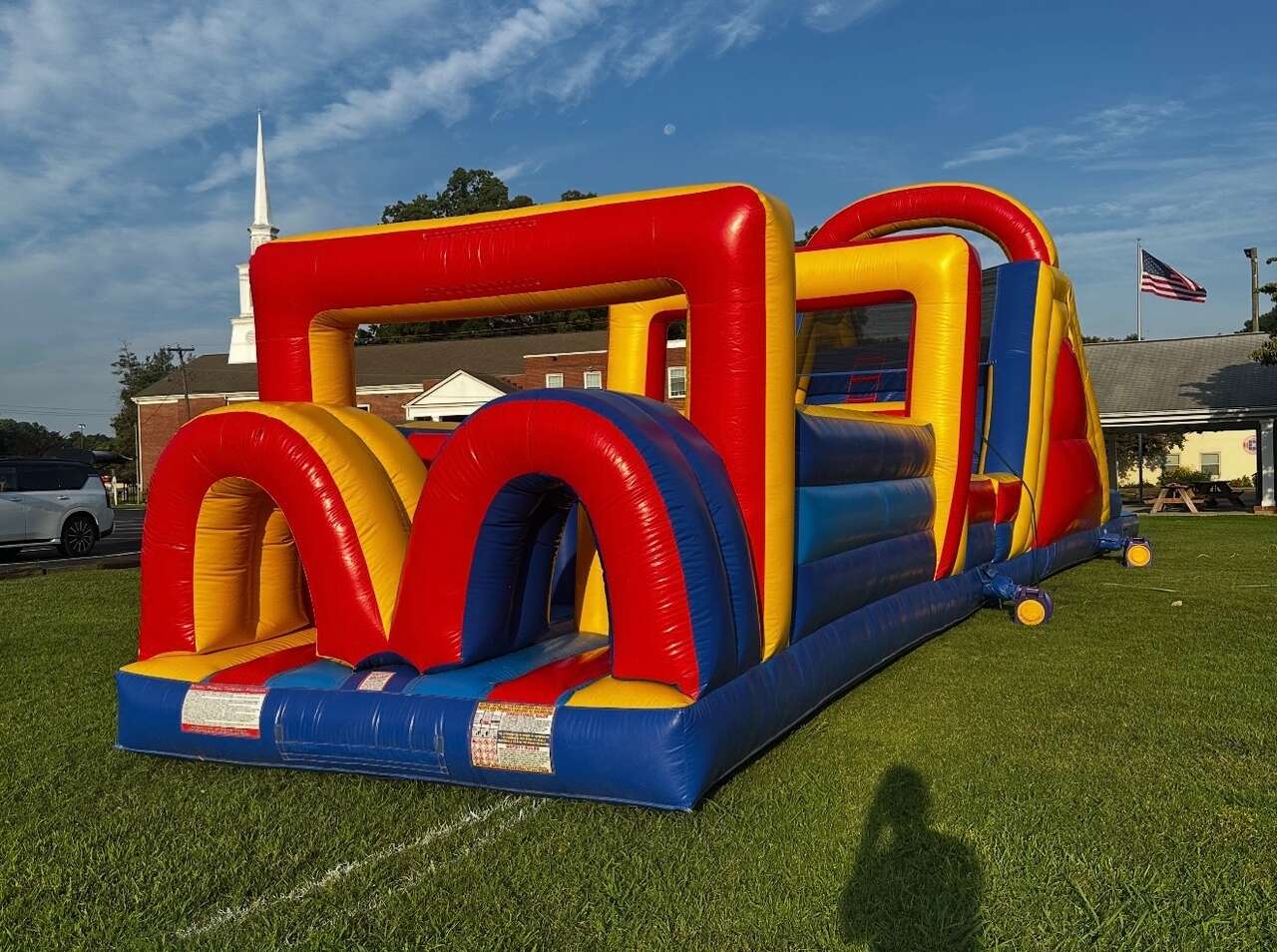
Fall festivals go a step further with food, music, and larger attractions. If inflatables are part of your plan, the church event rentals lineup is worth a look early, because October Saturdays are the first dates to fill. We've covered how far ahead to book separately, so the short version is simple: reserve fall dates well before you finalize the rest of the plan.
Back to School Bash or Backpack Giveaway
Late July through the third week of August, depending on when your district starts. This one reaches families under real financial pressure who might never otherwise walk onto your campus, and it can be run with 10 to 15 volunteers.
The detail that matters most is dignity. Don't ask families to register, prove need, or sit through anything before they receive supplies. Set the supply tables toward the back so people walk past the food, the music, and the games on their way, which means they arrive at the giveaway already feeling like guests instead of applicants. Snow cones and hot dogs cost almost nothing and change the whole feel of the afternoon.
Events That Bring Your Own Congregation Closer
Not every event needs to be outreach. Some of the best ones exist so that people who see each other every Sunday finally have three unhurried hours together.
Church Picnic or Family Fun Day
The classic, and the one most often done halfway. A picnic where everyone eats and then stands around for twenty minutes is a lunch, not an event. What turns it into a family fun day is having three or four things going at the same time so nobody has to be entertained on a schedule.
A reasonable spread looks like this: an inflatable or a large game for younger kids, a field game like kickball or a water balloon toss for the middle group, cornhole and a shaded seating area for adults, and food running the whole time rather than at one fixed hour. That last piece is underrated. When food is served at exactly 12:30, everyone leaves at 1:15. When food runs continuously, people stay and talk.
VBS Closing Celebration
Vacation Bible School already did the hard work of getting kids on campus for a week. The closing night is where you get their parents, and most churches treat it as an afterthought.
Make it the biggest day of the week instead. Kids who have been telling their families about VBS for five days will drag those families out for a water day or a family night, and that's your one clean shot at meeting parents you've never met. Summer timing means water works well here, and it also means volunteers are already trained and on campus. You need maybe six extra people beyond your existing VBS crew.
Volunteer and Ministry Appreciation Night
No inflatables, no field games, and it might be the highest-return event on this list. The people who run your nursery, your parking team, and your kitchen burn out quietly, and most churches thank them from the stage once a year and call it done.
An actual appreciation night means childcare provided, a real meal that volunteers did not cook, and no program longer than fifteen minutes. Ten volunteers can run it for a hundred people. Schedule it in January or early February when the calendar is empty and morale is lowest, not in December when everyone is already stretched.
Events Built to Reach the Neighborhood
There's a real difference between an event that draws your members and one that draws the street. The second kind requires a low-barrier invite, meaning a family can show up, enjoy themselves, and leave without ever being asked for a name, an email, or a commitment.
That matters more here than in most places. Between Langley, Fort Eustis, and the Naval Weapons Station, a large share of families in Hampton, Newport News, and Yorktown arrived recently and don't know anybody yet. A lot of them are actively looking for a place to land. A neighborhood event that asks nothing is often the first door they walk through.
Block Party or Open House Outreach
Held on your campus but marketed entirely to the surrounding blocks. Door hangers within a half mile beat social media for this, because you're reaching people who don't follow you anywhere. Spring or early fall evenings work best, and 15 to 20 volunteers is usually enough.
Position volunteers outside the building, not inside it. A greeting table at the sidewalk edge with cold drinks does more than a beautifully decorated fellowship hall that people have to work up the nerve to enter. Churches near neighborhoods with active HOAs sometimes find it easier to co-host, and the same setup considerations apply to neighborhood and community events generally.
Youth Group Kickoff Night
August or early September, aimed squarely at middle and high schoolers, and built around the assumption that every student brings a friend. Teenagers are the group most often ignored at church family events, and they notice.
The kickoff works when it's competitive and slightly ridiculous. Obstacle course races, a bracket tournament, a messy game with a leaderboard. Something that produces a winner and a video. What doesn't work is a room with pizza and a worship set, which is fine for your regulars and unbearable for a first-time guest who was talked into coming.
One for the Spring Calendar
Easter Egg Hunt or Spring Celebration
Second only to fall festivals for community draw, and the one most likely to go wrong through pure logistics. The classic failure is a single hunt for all ages, which ends in about ninety seconds with the four-year-olds crying and the ten-year-olds carrying forty eggs each.
Split it by age with staggered start times and separate areas. Toddlers first in a small roped section with eggs sitting in plain view, then elementary, then a harder hunt for older kids with hidden eggs or a prize-egg system. Announce the times in advance so families arrive when their kid's hunt starts instead of waiting around. Plan on 20 volunteers, most of them for the twenty minutes of chaos, and stuff eggs at a church workday weeks earlier because it always takes longer than anyone expects.
What Churches Often Overlook
These come up over and over at church events, and every one of them is fixable in the planning stage.
The most common problems, roughly in order of how often they cause trouble:
- Planning for the pews, not the neighborhood: if the event assumes people already know where the fellowship hall is, it's a members' event with an open invitation attached. Signage, outdoor placement, and volunteers stationed at the entrance fix most of this.
- One activity for a fifteen-year age range: churches serve toddlers through teenagers at the same event, and nothing covers that span. Plan in three tiers and expect the middle tier (roughly ages 8 to 12) to be the one you forget.
- Underestimating volunteers: committees consistently guess low. Count every station, add someone for setup and teardown, then add two floaters for the things you didn't think of. A shortage on the day means your volunteers never get to enjoy the event they planned.
- Power access: a beautiful open field is often a hundred feet or more from the nearest outlet, and extension cords across a lawn are a trip hazard and usually not enough power anyway. A generator solves it, and it's worth walking the site with a tape measure before you assume the outlet is close enough.
- No rain plan: decide in advance which parts move indoors cleanly (food, crafts, giveaways) and which have to be rescheduled. Then set a call time, usually the morning of, and tell families where the announcement will be posted.
- Starting too late: an October event planned in September gets whatever is left over, in every category.
On timing: a two-hour window with a clear start and end almost always beats an all-day event. All-day events trickle, which means the parking lot never looks full, volunteers work a six-hour shift for the same total attendance, and the energy never builds. Two hours creates a crowd.
One more on setup: grass and parking lots both work for most equipment, but they're staked and secured differently, and the surface changes what's possible. Knowing which surface you're using before you plan the layout saves a lot of last-minute rearranging.
Frequently Asked Questions
How far in advance should we plan a fall church event?
Start eight to ten weeks out for an October event, which means August decisions. The planning itself doesn't take that long, but anything you need to reserve (equipment, tables, a food vendor, the campus itself) gets tight in the fall. Lock the date and anything you're renting first, then fill in the details.
How many volunteers does a church festival actually need?
It depends on the format, but most committees guess about 30 percent low. A trunk or treat with 15 trunks needs roughly 20 to 30 people once you count setup, food, parking, and teardown. Count every station individually rather than estimating, and add two floaters.
What if our field doesn't have power nearby?
This is common on church campuses where the usable field sits well away from the building. Inflatables need a dedicated power source running the whole time, so if the nearest outlet is more than about a hundred feet away, a generator is the practical answer. Measure the distance before the day of the event, not during setup.
Can we set up on grass, or does it need to be a parking lot?
Both work. Grass is anchored with stakes and a parking lot uses weights, so the main thing is telling us which surface you're planning on when you book. Let us know if there's a slope, sprinkler heads, or anything buried under the area you have in mind.
How long should a church family event run?
Two hours for most formats, three at the outside for a full festival with food. Publish a hard start and end time and stick to it. Families plan around a defined window far more reliably than an open-ended "come by anytime," and your volunteers will thank you.
If your date is already set, you can check that date to see what's still open for it.
Next step: you don't have to have the whole event figured out to start. See what works for church events or contact us and tell us what you're planning, and keep in mind that fall Saturdays fill first.
